%201%20(1).avif)
.avif)
What to Eat for Firmer Skin: A Greensboro Guide to Collagen Producing Food
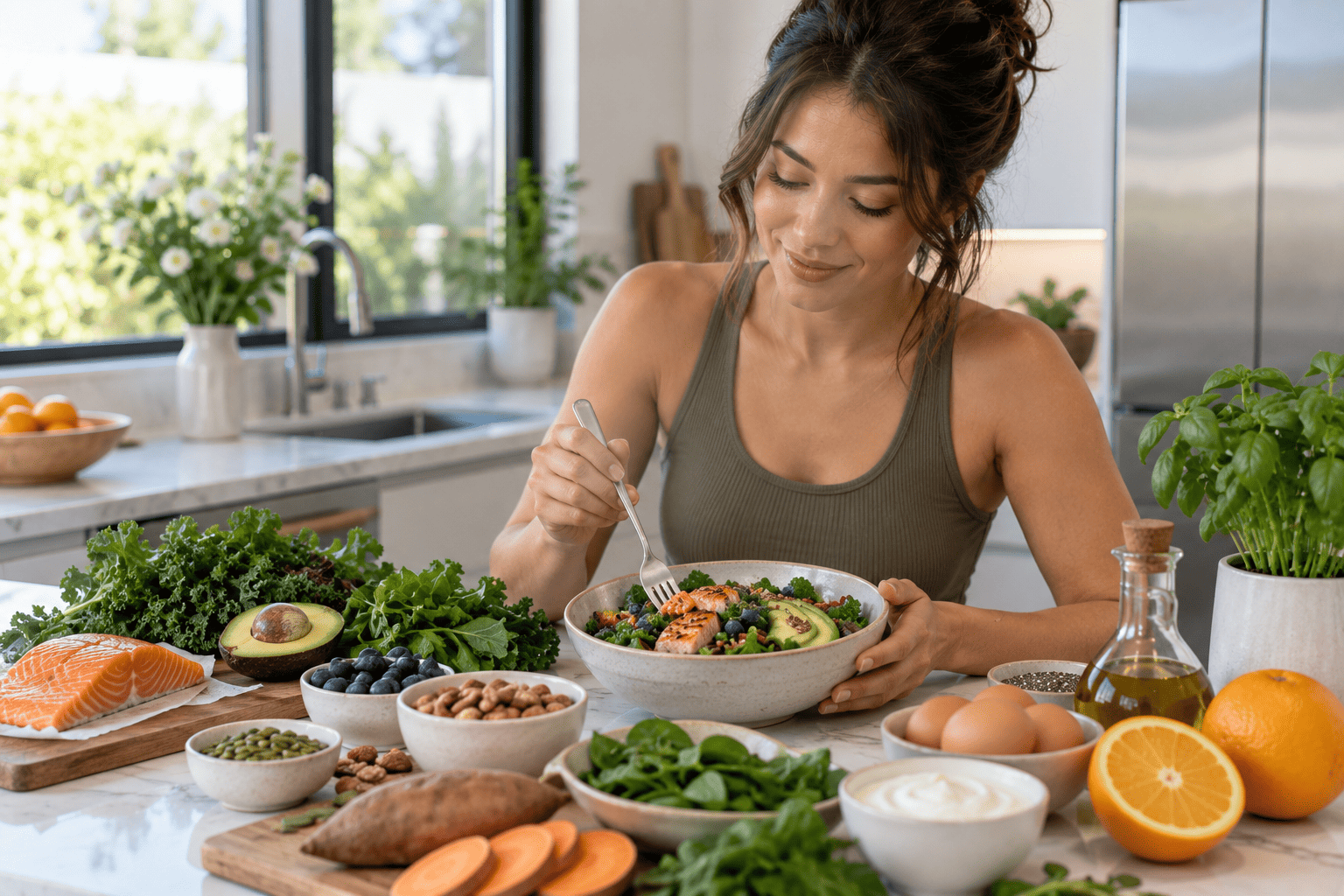
There is a moment most of us hit somewhere in our thirties or forties when we look in the mirror and notice something has shifted. Maybe it is a fine line that was not there last year, a little less bounce in the cheeks, or skin that just does not snap back the way it used to after a long night. That shift has a name, and it is collagen decline.
Collagen is the structural protein that keeps skin firm, plump, and resilient. Your body makes plenty of it in your twenties, but production starts slowing down as early as your mid-twenties and keeps dropping every year after that. By the time most people notice visible changes, they have already lost a meaningful percentage of the collagen they had a decade earlier.
The good news is that what you eat genuinely plays a role in supporting your skin's collagen network. The better news is that food is only part of the picture, and here in Greensboro, more people are learning how pairing a smart diet with the right in-office treatment gets them results that diet alone simply cannot deliver. This guide walks through both sides of that equation.
Why Does Collagen Matter So Much for Skin?
Collagen makes up a large share of your skin's dermis, the layer just beneath the surface that gives skin its structure. Think of it as the scaffolding that holds everything else in place. When collagen is abundant, skin looks smooth, springy, and full. When it breaks down faster than your body can replace it, the scaffolding starts to sag, and that is when fine lines, thinning skin, and a loss of facial volume start to show up.
What Happens When Collagen Production Slows Down?
As collagen production declines, skin loses its ability to bounce back from daily stress. You may notice deeper expression lines, hollowing in the cheeks or under the eyes, and skin that feels less firm to the touch. This is a completely normal part of aging, but the rate at which it happens is heavily influenced by lifestyle, sun exposure, and yes, diet. If you have already noticed some of these changes, our fine lines and wrinkles page breaks down what is typically happening beneath the surface.
Is Collagen Loss Just About Age, or Are Other Factors Involved?
Age is only part of the story. Unprotected sun exposure is one of the biggest accelerants of collagen breakdown, which is why so many Greensboro residents notice more visible aging after summers spent outdoors at Lake Townsend or on the greenway without consistent SPF. Smoking, high sugar intake, chronic stress, and poor sleep all speed up collagen degradation too. Sugar in particular binds to collagen fibers in a process called glycation, which makes them stiffer and more prone to breaking down. So while you cannot stop the clock, you can absolutely slow it down.
What Is the Best Collagen Producing Food for Skin Health?
Here is where nutrition earns its place in the conversation. Your body cannot absorb collagen protein and place it directly into your skin, but it can use specific nutrients as raw material and cofactors to build collagen on its own. That is the real function of collagen producing food, it gives your body what it needs to manufacture collagen more efficiently.
Which Foods Actually Support Collagen Production?
A few categories consistently show up when nutritionists talk about skin-supportive eating. Vitamin C is essential because it activates the enzymes your body uses to stabilize collagen molecules, and you get it from citrus fruits, bell peppers, strawberries, and broccoli. Protein and amino acids, especially proline and glycine, provide the actual building blocks of collagen, and bone broth, chicken, eggs, and fish are reliable sources. Zinc and copper, found in nuts, seeds, and shellfish, support the enzymes involved in collagen synthesis. Antioxidant-rich berries help protect existing collagen from oxidative damage, and leafy greens like spinach and kale bring a mix of vitamins that support overall skin health.
A simple way to picture a collagen-boosting day of eating might look like eggs and berries for breakfast, a salad with grilled salmon and citrus dressing for lunch, and a bone broth-based soup with leafy greens for dinner. None of this needs to be complicated or restrictive. It is more about consistency than perfection.
Are Collagen Supplements Worth Taking Too?
Supplements have become popular, and some research suggests hydrolyzed collagen peptides may support skin hydration and elasticity when taken consistently. They are not a replacement for a balanced diet, but they can be a reasonable addition for people who want extra support. We go into more detail on specific foods and supplements in our earlier post, the best foods and supplements to boost your collagen production, which pairs well with this guide if you want a deeper dive into supplement options.
Does Sleep Affect Collagen Too?
It absolutely does. Your skin does much of its repair work while you sleep, including collagen remodeling. If you are eating well but consistently running on five or six hours of sleep, you are working against yourself. We covered this connection in detail in does sleep help repair skin, and it is worth a read if late nights have become the norm.
Can Food Alone Reverse Visible Signs of Aging?
This is the honest part of the conversation. Eating collagen-supportive foods is genuinely one of the best things you can do for your skin's long-term health, but it works on a slow, cumulative timeline, and it cannot rebuild volume that has already been lost or smooth lines that have already set in. Food supports the foundation. Visible, faster results come from treatments that directly stimulate new collagen production in the skin.
How Do Professional Treatments Build on a Collagen-Friendly Diet?
This is exactly where our approach at The Curated Aesthetic comes in. Think of your diet as the foundation and in-office treatments as the accelerant. We offer several services built specifically around stimulating your skin's own collagen response, including biostimulators like Sculptra, which gradually rebuild volume and structure over time by triggering your body's natural collagen production. For patients dealing with fine lines, texture, or early volume loss, microneedling creates controlled micro-injuries that prompt the skin to produce fresh collagen and elastin.
Pair either of those with medical-grade skincare formulated to support collagen at the cellular level, and you have a plan that works from the inside and the outside at the same time. If you have noticed hollowing in the cheeks or under the eyes, our page on volume loss walks through how biostimulating treatments can help restore that fullness gradually and naturally.
Who Is a Good Candidate for Collagen-Stimulating Treatments?
Most adults who are noticing early fine lines, mild volume loss, or skin that feels less firm than it used to are excellent candidates. These treatments tend to work best for people who already have some foundation of healthy habits in place, since good nutrition, hydration, and sun protection all help maintain results longer. If you are unsure where you fall, that is exactly what a consultation is for.
Frequently Asked Questions
What is the best collagen producing food for skin health? There is not one single winner, but foods rich in vitamin C like citrus and bell peppers, combined with protein sources like eggs, fish, and bone broth, give your body the raw materials and cofactors it needs to produce collagen efficiently.
How long does it take to see results from eating collagen producing foods? Dietary changes typically take several weeks to a few months of consistent eating before any subtle improvements in skin texture or hydration become noticeable, since collagen remodeling is a gradual process.
Can diet alone fix sagging skin or deep wrinkles? Diet supports the health of your existing collagen and can slow further breakdown, but it generally cannot reverse significant volume loss or deep lines on its own. That is where treatments like biostimulators and microneedling make a visible difference.
Are there foods that damage collagen and should be limited? Yes, high sugar intake, excess alcohol, and processed foods can accelerate collagen breakdown through a process called glycation. Unprotected sun exposure has a similar effect on the skin's collagen structure.
Do I need to combine diet with professional treatment to see real results? For most people who want visible, lasting improvement, yes. A collagen-supportive diet builds a healthy foundation, while treatments like Sculptra or microneedling actively stimulate new collagen production for results diet alone cannot achieve.
The Real Recipe for Skin That Ages Well
At the end of the day, no single meal or supplement is going to erase years of sun exposure or turn back the clock overnight. But building a plate around collagen-supportive foods, protecting your sleep, and staying consistent will genuinely support healthier, more resilient skin over time here in Greensboro and everywhere else. When you are ready to take it further, pairing that foundation with a treatment plan designed around your specific skin goals is how you get results you can actually see in the mirror.
If you have been curious about what a personalized plan could look like for you, we would love to talk it through. Reach out through our contact page to schedule a consultation, and let's build a plan that works from your kitchen to our treatment room. Updated this August 2026.