%201%20(1).avif)
.avif)
Why Do Your Cheeks Look Hollow, Even When You're Not Losing Weight?
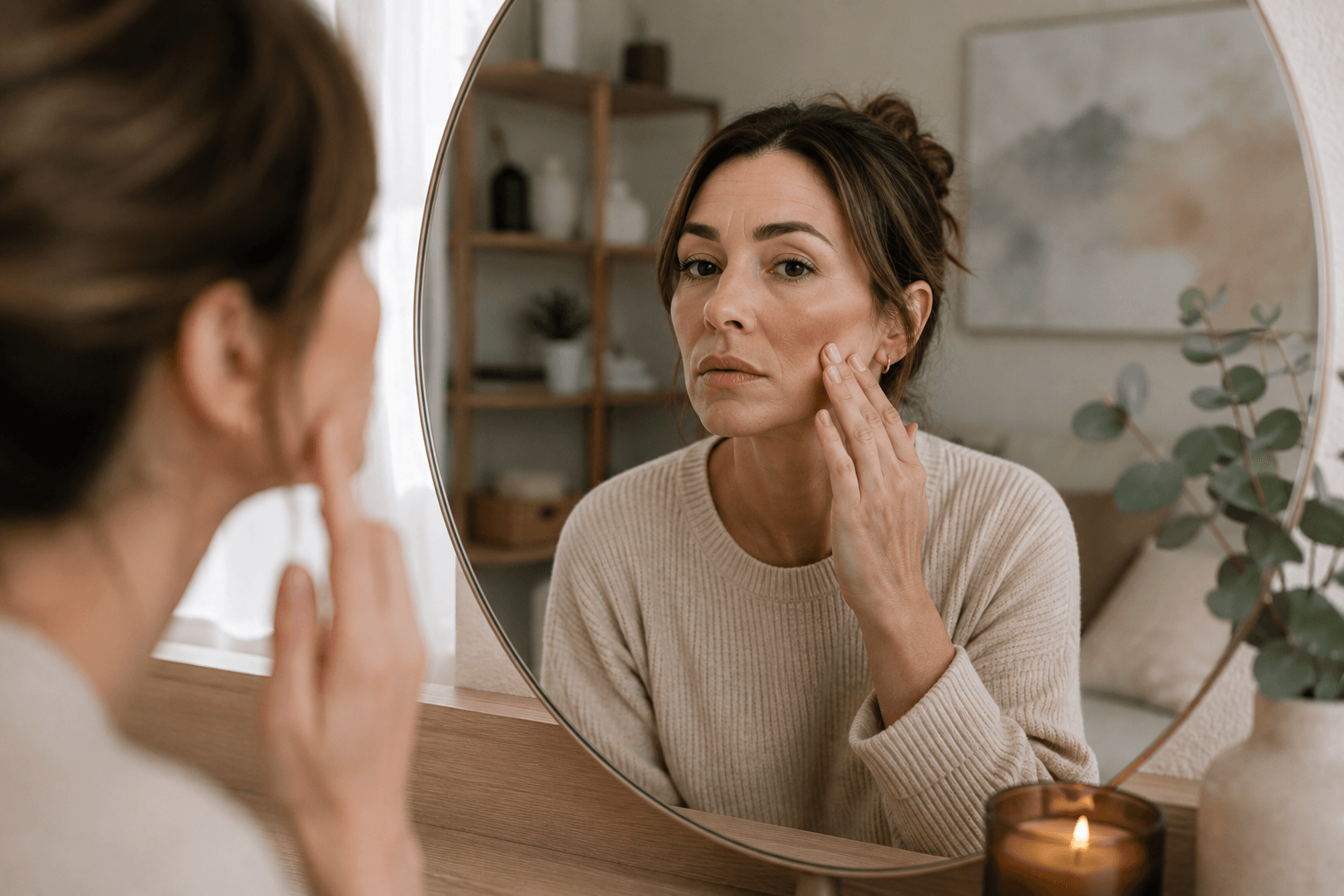
You haven't changed your diet. You're sleeping fine. But lately, when you catch your reflection in the car window or a photo pops up on your phone, something looks different. Your cheeks seem flatter. The area under your eyes casts more of a shadow than it used to. Friends might even ask if you're feeling okay, when really, you feel completely normal. You just look a little more tired, a little more hollow, than you feel.
If this sounds familiar, you're not imagining it, and you're definitely not alone. This is one of the most common (and most misunderstood) concerns we hear from clients walking through our doors here in Greensboro. It's rarely about weight loss or lack of sleep. More often, it's about volume, specifically, the natural fat and structural support in your face that quietly diminishes over time.
The good news is that once you understand what's actually happening beneath the surface, the solution becomes a lot clearer. And it's not about doing more, it's about restoring what's already been lost.
What Causes That Hollow, Sunken Look in the Face?
Is It Normal for Cheeks to Lose Volume With Age?
Yes, and it starts earlier than most people expect. Your face isn't just skin stretched over bone. It's made up of layers, including fat pads that sit in specific pockets across your cheeks and under your eyes. Those fat pads provide the soft, rounded contour we associate with a youthful face. Starting in your late twenties and continuing steadily through your thirties and forties, those fat pads begin to shrink and shift downward. At the same time, collagen production slows, and the bone structure supporting your face can subtly remodel itself. The combined effect is a face that looks flatter, more angular, and sometimes tired, even when nothing else about your health has changed.
Why Do I Look Tired or Sad When I'm Not?
This is one of the most frustrating parts of volume loss. When the midface loses its fullness, the tissue around the eyes and mouth loses its support system too. The result is often a permanent look of fatigue or sadness that has nothing to do with how you actually feel. If you've ever looked in the mirror and thought "I look tired" or "I look sad" despite getting plenty of rest, this is very likely what's happening. It's a structural issue, not an emotional one, and it's one of the more common concerns we address for clients who come in for a consultation.
What Else Contributes to Facial Volume Loss?
Genetics play a role, but so do sun exposure, smoking, significant weight fluctuations, and even long-term stress. Sun damage in particular breaks down collagen and elastin at a faster rate, which is worth keeping in mind here in the Piedmont Triad, where humid summers mean more UV exposure than many people realize. Add in the natural aging process, and the cheeks, temples, and under-eye area are often the first places where volume loss becomes noticeable, well before fine lines or wrinkles show up anywhere else.
Can Volume Loss Be Prevented or Slowed Down?
There's no way to stop the aging process entirely, but you can slow visible changes with consistent sun protection, a solid skincare routine, and avoiding habits that accelerate collagen breakdown. A great medical-grade skincare routine helps maintain the health and thickness of your skin, which supports whatever volume is still there. That said, prevention only goes so far. Once fat pads shrink, skincare alone can't restore that lost structure. That's where treatments designed specifically to rebuild volume come into play.
How Is Volume Loss Actually Treated?
What Is Dermal Filler and How Does It Help?
Filler is a gel-like substance, typically made from hyaluronic acid, a molecule your body already produces naturally, that's injected beneath the skin to restore lost volume and support facial structure. Rather than just smoothing a wrinkle on the surface, filler works by rebuilding the foundation underneath, which is why it's so effective for cheeks that have lost their fullness or under-eye areas that look hollow. At The Curated Aesthetic, our approach to dermal fillers is centered on restoring natural contour, not creating an overdone or artificial appearance. The goal is always to help you look like a well-rested version of yourself, not a different person entirely.
Where Is Filler Most Commonly Used for Volume Loss?
The cheeks and midface are among the most requested areas, since that's where volume loss tends to show up first and most dramatically. We also see a lot of interest in restoring fullness around the chin and jawline and softening the mouth area and smile lines, since volume loss in the midface often causes tissue to sag toward the lower face over time. If your main concern is specifically that sunken or tired appearance, our volume loss page walks through how we evaluate and address it during a consultation.
Is Filler the Same as Botox or Neurotoxins?
Not at all, and this is a distinction we explain often. Neurotoxins like Botox relax the muscles that cause repetitive expression lines, such as crow's feet or forehead creases. Filler does something different: it adds volume and structure where it's been lost. Someone dealing with hollow cheeks or a flattened midface generally needs filler, not a neurotoxin, since the concern isn't muscle movement, it's missing volume. We've broken this comparison down in more detail in our post on filler versus Botox, which is worth a read if you're trying to figure out which treatment actually fits your concern.
How Does Filler Compare to Sculptra or Biostimulators?
For some clients, especially those with more significant volume loss or who prefer a gradual, longer-term approach, a biostimulator like Sculptra may be recommended instead of, or alongside, traditional filler. Rather than adding volume immediately, biostimulators work by encouraging your own body to rebuild collagen over several months, resulting in a slower but very natural-looking improvement. During your consultation, we'll talk through your goals, timeline, and the extent of volume loss to determine which option, or combination, makes the most sense for you.
Who Is a Good Candidate for Filler?
Most healthy adults noticing volume loss, hollowing, or flattening in the cheeks, under-eyes, or lower face are good candidates for filler. It's especially well suited for people in their thirties through fifties who are starting to notice that tired or sad appearance we mentioned earlier, though we treat clients across a range of ages depending on individual concerns. The best way to know for sure is a consultation, where we assess your facial structure, discuss your goals, and make sure filler is the right fit rather than assuming it's a one-size-fits-all answer.
What Should I Expect During and After Treatment?
Filler appointments are typically quick, often finished within thirty to forty-five minutes, and performed right in our Greensboro facility with a topical numbing option available for comfort. Most clients see results immediately, with any minor swelling or bruising settling within a few days. There's generally no significant downtime, meaning you can return to normal activities the same day, though we do recommend avoiding strenuous exercise for twenty-four hours or so. Results from hyaluronic acid filler typically last anywhere from six months to two years, depending on the treatment area and your body's natural metabolism, and touch-up appointments help maintain your results over time.
Why Choose The Curated Aesthetic for Filler in Greensboro?
Every face ages differently, which is why we don't believe in cookie-cutter treatment plans. Our team takes the time to understand your specific concerns, whether that's hollow cheeks, a flattened midface, or that persistent tired look, before recommending a plan tailored to you. You can learn more about our approach and see real results on our before and after page, or browse our full range of services to see how filler fits alongside other treatments we offer.
Frequently Asked Questions
Does filler hurt? Most clients describe the sensation as mild pressure or a quick pinch rather than significant pain. We use topical numbing to keep you comfortable throughout the appointment, and any soreness afterward is typically minimal.
How long does filler last in the cheeks? Cheek filler generally lasts between twelve and eighteen months, though this varies based on the specific product used and your individual metabolism. Areas with more movement, like the lips, tend to metabolize filler a bit faster.
Will filler make my face look overdone or puffy? Not when it's done thoughtfully. The goal of filler at our practice is to restore natural contour and support, not to add exaggerated volume. A conservative, well-planned approach almost always looks more natural than an aggressive one.
Can filler fix the tired or sad look I've had for years? In many cases, yes. If that appearance is caused by volume loss in the cheeks or under-eyes rather than sagging skin or muscle movement, filler can restore the support and fullness that's been lost, softening that tired or sad appearance significantly.
How do I know if I need filler or a neurotoxin like Botox? It comes down to what's actually causing your concern. If it's about volume and lost fullness, filler is usually the answer. If it's about lines caused by repeated facial expressions, a neurotoxin is typically more appropriate. A consultation is the easiest way to get a clear answer for your specific face.
The Real Reason You Look More "You" Again
Hollow cheeks and that tired, sad appearance aren't something you have to accept as inevitable, and they're definitely not a sign that something is wrong with you. They're simply a natural part of how faces change over time, and thankfully, one of the more straightforward concerns to address once you understand what's really going on beneath the surface.
If you've been noticing these changes in the mirror and you're ready for a real conversation about your options, we'd love to see you at The Curated Aesthetic.
Our Greensboro team is happy to walk you through a personalized plan, whether that's filler, a biostimulator, or a combination approach designed around your face and your goals. Reach out through our contact page to schedule a consultation, and let's talk about getting that fuller, well-rested look back. This guide was updated this August 2026 to reflect our current approach to volume restoration.